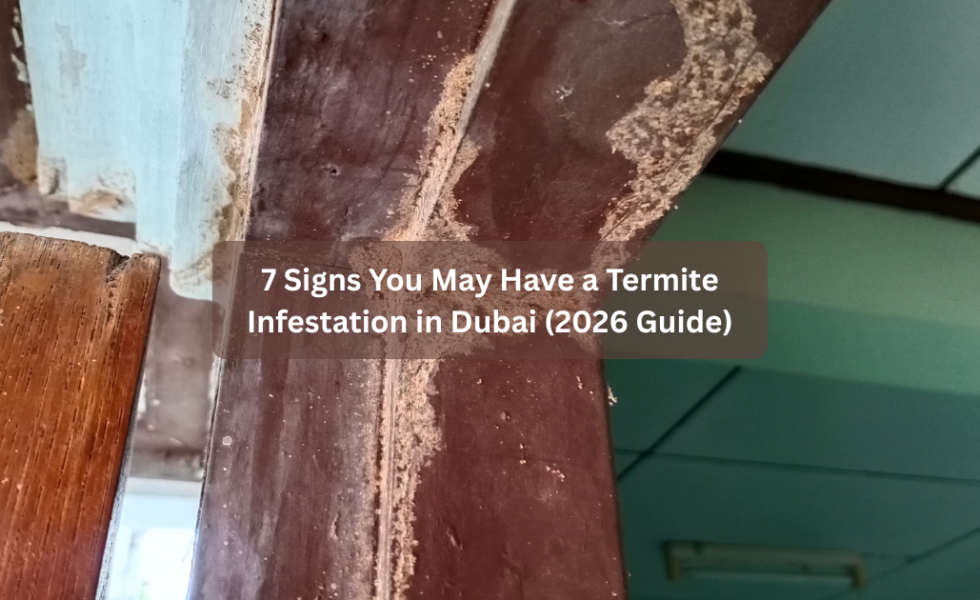
7 Signs You May Have a Termite Infestation in Dubai (2026 Guide)
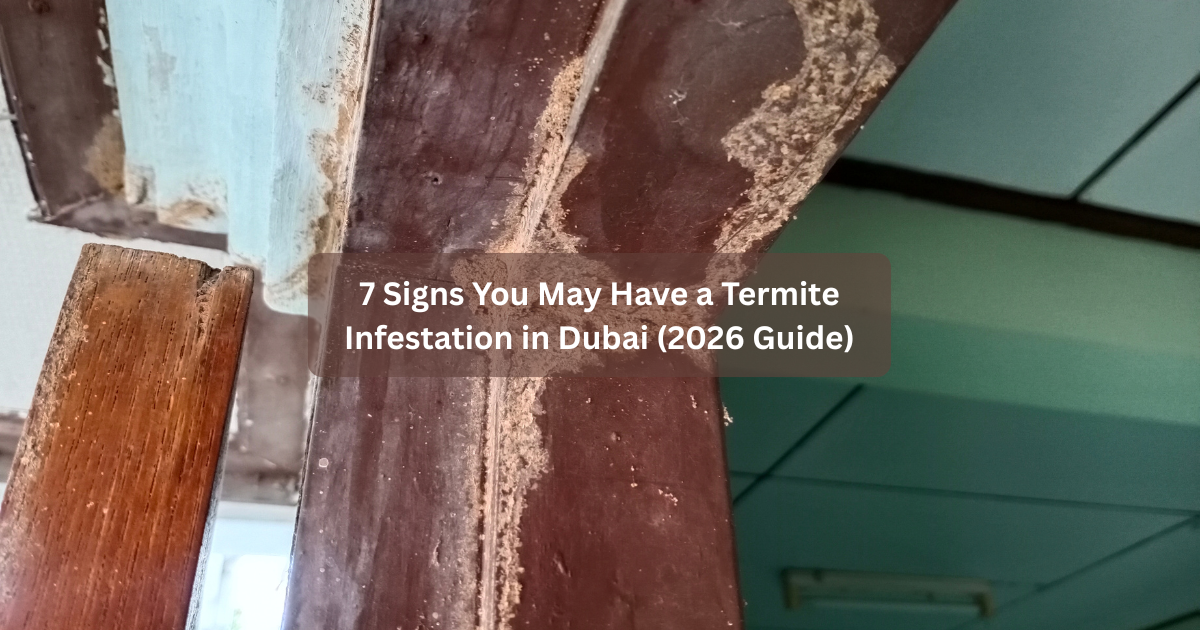
Termites are often called “silent destroyers” because they can cause significant damage to a property before homeowners even realize they are present. In Dubai, termites are a serious concern due to the warm climate, ongoing construction activities, and the extensive use of wood in furniture, doors, flooring, and interior finishes.
Many property owners only discover a termite infestation after expensive damage has already occurred. Knowing the early warning signs can help you take action before termites compromise the structural integrity of your home.
In this guide, we’ll discuss the most common signs of a termite infestation in Dubai and what you should do if you suspect termites are present.
Why Termites Are a Problem in Dubai
Dubai’s climate provides favorable conditions for termite activity throughout the year.
Factors that contribute to termite infestations include:
- Warm temperatures
- Moisture from irrigation systems
- Landscaping near buildings
- Wooden furniture and fixtures
- Construction expansion in residential communities
Termites can remain hidden for months or even years while feeding on wood and cellulose materials.
Sign #1: Hollow-Sounding Wood
One of the earliest signs of a termite infestation is wood that sounds hollow when tapped.
Termites consume wood from the inside out, leaving a thin outer layer intact.
Common areas to check:
- Wooden doors
- Door frames
- Cabinets
- Wooden flooring
- Furniture
If wood sounds hollow or feels unusually weak, termites may already be active inside.
Sign #2: Mud Tubes on Walls or Foundations
Subterranean termites build mud tubes to travel safely between their nest and food sources.
These pencil-sized tunnels are commonly found:
- Along walls
- Foundation areas
- Outdoor structures
- Garden walls
- Utility entry points
Mud tubes are one of the strongest indicators of an active termite infestation in Dubai.
Sign #3: Swarmers or Flying Termites
Many homeowners mistake termite swarmers for flying ants.
Flying termites appear when colonies mature and begin reproducing.
You may notice:
- Swarms near windows
- Flying insects around lights
- Discarded wings on floors or window sills
This often indicates a nearby termite colony.
Sign #4: Tight Doors and Windows
Termite activity can create moisture buildup inside wooden structures.
As a result:
- Doors become difficult to close
- Windows start sticking
- Frames appear swollen
Many homeowners incorrectly assume humidity is the cause when termites may actually be responsible.
Sign #5: Cracked or Bubbling Paint
Termites create moisture behind walls and wooden surfaces.
This can lead to:
- Bubbling paint
- Peeling paint
- Small cracks on walls
- Distorted wood surfaces
These symptoms are often confused with water damage.
Sign #6: Termite Droppings (Frass)
Drywood termites leave behind small pellet-like droppings known as frass.
These droppings are often found:
- Near furniture
- Below wooden structures
- Around window frames
- Inside cabinets
If you notice piles of tiny wood-colored pellets, termite activity may be present.
Sign #7: Visible Wood Damage
In advanced infestations, termites cause obvious damage.
Signs include:
- Crumbling wood
- Sagging floors
- Damaged skirting boards
- Weakened furniture
- Structural deterioration
At this stage, immediate professional intervention is essential.
Areas Most Vulnerable to Termites in Dubai Homes
Termites commonly attack:
Wooden Doors and Frames
Wooden entrances provide an easy food source.
Kitchen Cabinets
Moisture and wood make kitchens attractive to termites.
Garden Structures
Pergolas, fences, and outdoor wooden features are particularly vulnerable.
Wooden Flooring
Hidden infestations beneath flooring can remain undetected for long periods.
Furniture
Termites often infest wooden tables, wardrobes, and storage units.
How to Prevent Termite Infestations
While no property is completely immune, homeowners can reduce risk by:
- Fixing water leaks promptly
- Reducing wood-to-soil contact
- Inspecting wooden structures regularly
- Removing excess moisture around the property
- Scheduling annual termite inspections
Early detection is the most effective form of termite prevention.
When Should You Call a Professional?
You should contact a termite control specialist immediately if:
- You discover mud tubes
- Flying termites appear indoors
- Wood sounds hollow
- Visible damage is increasing
Termites multiply rapidly, and delays can significantly increase repair costs.
Professional termite control services can identify the infestation source and implement targeted treatment plans before serious structural damage occurs.
Final Thoughts
A termite infestation in Dubai can remain hidden for months while causing extensive damage to your property. Recognizing the early warning signs can save you thousands of dirhams in repair costs and protect your home from long-term structural issues.
If you notice hollow wood, mud tubes, termite droppings, or flying termites, it is important to act quickly.
Early detection and professional termite treatment are the keys to protecting your property from costly termite damage.
Need Professional Termite Control in Dubai?
Alpha Arabian Pest Control provides:
- Comprehensive termite inspections
- Advanced termite treatment solutions
- Safe and municipality-approved methods
- Residential and commercial termite control services
Book your FREE termite inspection today and protect your property before termites cause serious damage.