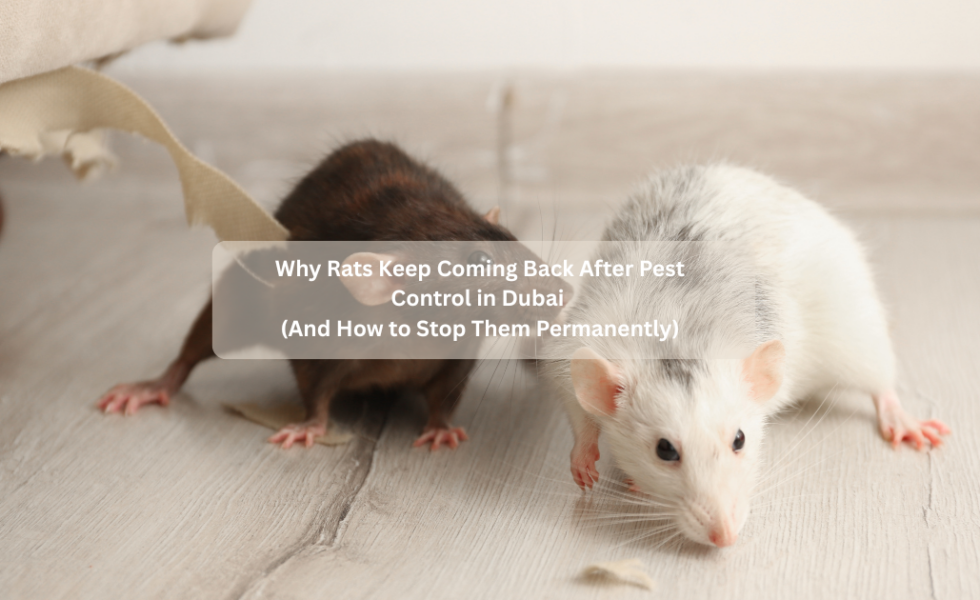
Why Rats Keep Coming Back After Pest Control in Dubai (And How to Stop Them Permanently)
Why Rats Keep Coming Back After Pest Control in Dubai (And How to Stop Them Permanently)
You’ve had your property treated for rats, everything seemed fine for a few weeks, and then suddenly you hear scratching noises in the ceiling again or notice fresh droppings in the kitchen.
If this sounds familiar, you’re not alone.
Many homeowners and business owners in Dubai assume that once pest control has been carried out, the rat problem is gone for good. Unfortunately, rodent infestations often return when the underlying causes aren’t addressed.
The good news is that recurring rat infestations are preventable. By understanding why rats keep coming back and taking the right preventive measures, you can protect your property for the long term.
Why Rat Problems Are Common in Dubai
Dubai’s rapid urban development, extensive drainage systems, construction projects, landscaped communities, and year-round warm climate create favorable conditions for rodents.
Rats are highly adaptable and can survive in:
- Residential villas
- Apartment buildings
- Restaurants
- Warehouses
- Shopping areas
- Office buildings
- Construction sites
- Gardens and parks
They only need three things to survive:
- Food
- Water
- Shelter
If your property provides these essentials, rats will continue looking for ways to enter.
Why Do Rats Return After Pest Control?
Many people believe the treatment has failed when rats reappear. In reality, there are several reasons why rodents may return after an initial treatment.
1. Only the Visible Rats Were Eliminated
One of the biggest misconceptions about rat control is assuming that removing a few visible rats solves the entire problem.
Rats are excellent at hiding inside:
- False ceilings
- Wall cavities
- Roof spaces
- Drainage systems
- Storage rooms
- Garden burrows
If the nesting site remains active, new rats will continue appearing.
2. Entry Points Were Never Sealed
Professional treatment is only one part of successful rodent control.
If small gaps around pipes, vents, doors, drains, or utility lines remain open, rats can simply re-enter the property.
Remember, a rat can squeeze through surprisingly small openings.
Common entry points include:
- AC pipe penetrations
- Drainage openings
- Utility cable gaps
- Damaged door sweeps
- Roof vents
- Broken air bricks
Without proper exclusion work, new rodents can quickly replace those that were removed.
3. Food Sources Are Still Available
Rats stay where food is easy to find.
Common food sources include:
- Uncovered garbage bins
- Pet food left outdoors
- Bird feeders
- Compost bins
- Fruit trees
- Open food storage
- Restaurant waste
Even small food crumbs can attract rodents.
Good sanitation is one of the most effective long-term prevention measures.
4. Water Sources Encourage Rodent Activity
Like all animals, rats need water.
Leaking taps, irrigation systems, AC condensation, clogged drains, and standing water create ideal conditions.
Fixing moisture problems is just as important as removing the rodents themselves.
5. Nearby Construction Can Displace Rats
Dubai is constantly growing.
Construction activity often disturbs underground rodent populations, forcing rats to migrate into nearby homes and commercial buildings.
Many infestations begin shortly after nearby excavation or demolition work.
6. Neighboring Properties May Be Infested
In apartment buildings, villas with shared boundaries, and commercial complexes, rats don’t respect property lines.
If neighboring properties have active infestations, rodents may continue entering your premises.
This is why community-wide rodent management is often more effective than treating a single property.
7. DIY Treatments Often Provide Temporary Results
Many homeowners try:
- Retail poison
- Sticky traps
- Snap traps
- Ultrasonic devices
- Homemade remedies
While these methods may reduce visible activity, they rarely eliminate the entire colony.
In some cases, rodents simply avoid traps and relocate to another part of the property.
Signs Your Rat Problem Has Returned
Watch for these early warning signs:
- Fresh droppings
- Gnaw marks on wood or plastic
- Damaged electrical cables
- Scratching sounds in ceilings or walls
- Burrows in gardens
- Greasy rub marks along walls
- Unpleasant odours
- Pet food being disturbed overnight
Early intervention prevents a small problem from becoming a major infestation.
How Professional Rat Control Provides Long-Term Results
Professional rodent management goes beyond placing bait or traps.
A complete treatment typically includes:
Comprehensive Inspection
Technicians identify:
- Nesting locations
- Rodent travel routes
- Entry points
- Food sources
- Water sources
- Areas of high activity
This allows treatment to be tailored to the property’s specific needs.
Targeted Rodent Control
Depending on the situation, professionals may use:
- Tamper-resistant bait stations
- Mechanical traps
- Monitoring stations
- Safe placement techniques
- Integrated Pest Management (IPM)
The goal is to reduce rodent activity while minimizing risks to occupants and pets.
Rodent Proofing
One of the most important steps is preventing rats from returning.
Rodent proofing may involve:
- Sealing gaps around pipes
- Repairing vents
- Installing door seals
- Closing wall openings
- Protecting drainage access points
Without exclusion work, even successful treatments may only provide temporary relief.
Ongoing Monitoring
Large villas, restaurants, warehouses, and commercial properties often benefit from routine inspections and monitoring.
Regular visits help identify new activity before it develops into a significant infestation.
Tips to Prevent Rats from Returning
Homeowners can reduce the risk of reinfestation by following these simple practices:
- Store food in sealed containers.
- Keep kitchens clean.
- Dispose of garbage regularly.
- Trim overgrown vegetation.
- Avoid leaving pet food outdoors overnight.
- Repair leaking pipes.
- Seal gaps around utilities.
- Keep storage areas organised.
- Schedule routine pest inspections.
Small preventive actions can significantly reduce rodent activity.
Why Choose Alpha Arabian for Rat Control in Dubai?
Alpha Arabian Pest Management provides professional rodent control services across Dubai for residential, commercial, and industrial properties.
Our approach focuses on long-term prevention rather than temporary fixes.
Our services include:
- Detailed property inspections
- Identification of rodent species
- Targeted treatment plans
- Safe application methods
- Rodent-proofing recommendations
- Preventive maintenance programs
- Follow-up inspections
Whether you own a villa in Jumeirah, an apartment in Downtown Dubai, a warehouse in Al Quoz, or a restaurant in Business Bay, our experienced technicians deliver effective rodent management solutions tailored to your property.
Final Thoughts
If rats keep returning after pest control, it’s usually because the root cause hasn’t been addressed.
Successful rodent management requires more than simply removing visible rats. It involves identifying entry points, eliminating food and water sources, sealing access routes, and implementing a long-term prevention strategy.
By combining professional treatment with good property maintenance, homeowners and businesses can significantly reduce the risk of recurring infestations.
If you’ve noticed fresh signs of rodent activity after a previous treatment, scheduling a professional inspection is the best way to identify the source and prevent the problem from escalating.
Frequently Asked Questions
Why do rats come back after pest control?
Rats often return if entry points remain open, food or water sources are available, neighbouring properties have infestations, or only the visible rodents were eliminated.
How long does professional rat control take?
Results depend on the size of the infestation, but noticeable reductions are often seen within days. Complete control and prevention may require follow-up visits and exclusion work.
Can rats damage my home?
Yes. Rats can chew electrical wiring, insulation, wood, pipes, furniture, and stored items. They may also contaminate food and spread bacteria.
Is professional rat control safe for pets?
Professional technicians use carefully selected treatment methods and provide guidance to ensure the safety of pets and family members during and after treatment.
How can I stop rats from coming back permanently?
Long-term prevention involves sealing entry points, maintaining good sanitation, removing food and water sources, and scheduling routine inspections with a professional pest control company.