Tiny Ants in the Kitchen in Dubai: Why They Appear & How to Get Rid of Them
Tiny Ants in the Kitchen in Dubai: Why They Appear & How to Get Rid of Them
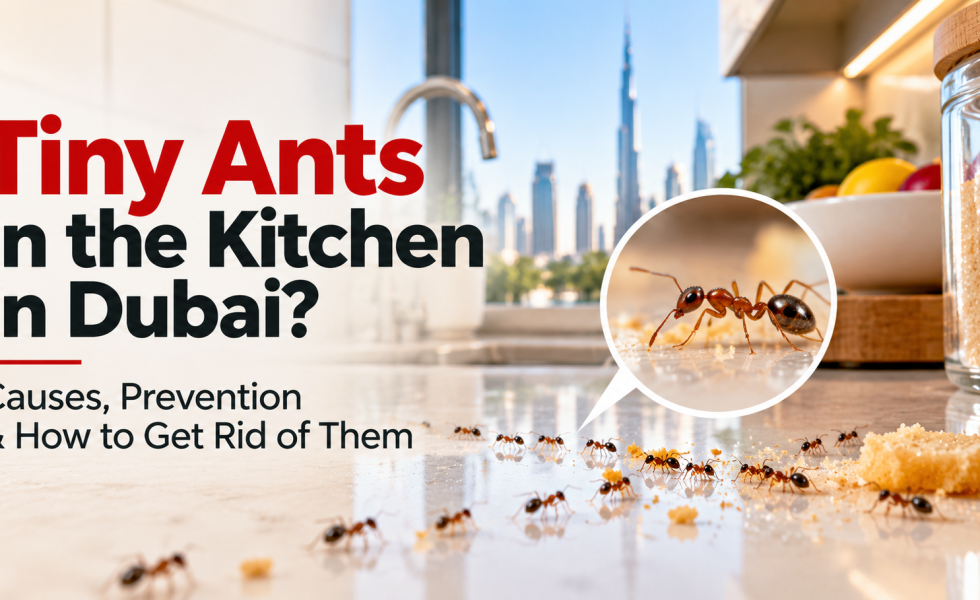
You clean the kitchen, wipe the counter and remove every ant you can see. A few hours later, another trail of tiny ants appears near the sink, cupboard or food-storage area.
If this keeps happening, the problem usually isn’t just the ants walking across your counter.
Tiny ants may be entering through very small gaps while searching for food, water and suitable nesting conditions. Once workers discover a reliable food source, more ants can follow.
This is why an effective approach to ants in the kitchen in Dubai should focus on where they are coming from, what is attracting them and whether an established colony is nearby.
Why Are Tiny Ants Appearing in My Kitchen?
Kitchens provide many of the things ants need within a relatively small area.
Even when a kitchen looks clean, ants may find small amounts of food or moisture that are easy to overlook.
Common attractions include:
- Sugar and sweet residues
- Food crumbs
- Fruit and other exposed foods
- Pet food
- Grease and cooking residue
- Moisture around sinks
- Water beneath appliances
- Waste bins
- Food stored in unsealed containers
A very small food source can be enough for foraging ants to continue returning to the same area.
Where Do Tiny Kitchen Ants Come From?
The ants you see on the counter may have travelled considerably farther than you expect.
They can enter kitchens through small structural openings such as:
- Gaps around windows and doors
- Cracks between cabinets and walls
- Spaces around plumbing
- Skirting and flooring gaps
- Wall openings
- Utility penetrations
- Balconies and external walls
In some cases, ants may also be nesting in a protected location inside or close to the property.
Following an ant trail from a safe distance can sometimes help reveal the general direction from which the workers are entering.
Why Are There Ants in My Kitchen Even Though It Is Clean?
Ant activity doesn’t necessarily mean a kitchen is unhygienic.
A well-maintained kitchen can still provide enough food or water to attract ants.
A few drops of sugary liquid behind a container, crumbs beneath an appliance or persistent moisture around plumbing may be enough to maintain foraging activity.
Ants can also enter from outside simply because they have discovered an accessible route into the property.
Cleaning is therefore an important part of prevention, but an established ant problem may require more than cleaning alone.
Why Do Tiny Ants Keep Coming Back?
This is one of the most common problems with DIY ant control.
You remove the visible ants, but the colony remains.
The ants walking around your kitchen are usually worker ants searching for resources. Killing those individual workers may temporarily reduce what you see without eliminating the source of the activity.
Other workers can continue travelling from the colony and rediscover food and water inside the kitchen.
This is one reason recurring infestations should be approached differently from an occasional individual ant.
Why Do Ants Form Trails Across Kitchen Counters?
Many ants communicate using chemical signals.
When a foraging ant discovers a useful food source, it can leave a chemical trail that helps other ants locate the same area.
This is why what begins as one or two ants can eventually develop into a visible trail.
Cleaning the surface can help disrupt some trail activity, but if the food source and entry route remain available, ants may establish the route again.
Where Should You Check for Ants in a Kitchen?
If ants repeatedly appear in your kitchen, don’t only inspect the exact spot where you see them.
Check nearby areas including:
- Under the kitchen sink
- Behind refrigerators
- Under cooking appliances
- Inside and around cabinets
- Food-storage shelves
- Waste-bin areas
- Around plumbing openings
- Window frames
- Door frames
- Cracks between counters and walls
Look for both potential food sources and the route ants may be using to enter.
How Do You Get Rid of Tiny Ants in the Kitchen?
The appropriate approach depends on how severe the activity is and where the colony is located.
For recurring problems, control generally needs to address three things:
What is attracting the ants, how they are entering and where the colony or harbourage is located.
1. Remove Accessible Food Sources
Clean crumbs and spills promptly and pay particular attention to sugary or sticky residue.
Food should be stored in properly sealed containers where possible.
Areas underneath appliances and cabinets should also be cleaned periodically because food particles can accumulate in places that are not immediately visible.
2. Reduce Moisture
Ants need water as well as food.
Check underneath sinks and around plumbing for leaks or persistent moisture.
Wipe wet surfaces and investigate any recurring water accumulation where practical.
3. Manage Waste Properly
Kitchen bins can provide a continuous food source for ants.
Use suitable bins, empty them regularly and clean any food residue from the surrounding area.
4. Identify the Ant Trail
Rather than immediately killing every visible ant, observe where the trail appears to originate and where the ants are travelling.
This may help identify an entry point or likely nesting direction.
5. Address Entry Points
Small gaps around pipes, cabinets, windows and structural joints can provide access.
Once active infestation issues have been assessed, suitable openings can be sealed where appropriate to reduce future entry.
Does Ant Spray Get Rid of Tiny Kitchen Ants?
Household spray may kill ants that come into direct contact with it, but it does not necessarily reach the colony.
This can result in a familiar cycle:
Ants appear → visible ants are sprayed → activity decreases → ants return later.
Repeated spraying without understanding the source may therefore provide only temporary control.
Products should also always be used according to their label instructions, particularly around kitchens and food-preparation areas.
Do Ant Baits Work for Kitchen Ants?
Ant bait can be useful for certain ant problems because foraging workers may feed on the bait and carry material back toward the colony.
However, correct bait selection and placement are important.
Ant species and feeding preferences can differ, and a bait that is attractive in one situation may not necessarily be suitable in another.
Spraying insecticide directly around bait can also interfere with baiting because it may repel or kill workers before they interact with the bait as intended.
For persistent infestations, professional identification can help determine the appropriate treatment approach.
Should You Seal the Crack Where Ants Are Coming From?
Sealing entry points can be an important part of prevention, but timing matters.
If ants are actively emerging from a crack or structural opening, simply sealing that one opening may cause them to search for another route.
It can therefore be useful to assess and treat active infestation issues before completing appropriate exclusion work.
Can Tiny Ants Live Inside Kitchen Cabinets or Walls?
Ants can sometimes establish nests or satellite activity in protected spaces around buildings.
Repeated ants emerging from the same cabinet gap, wall opening, pipe penetration or skirting area may indicate activity close to that location.
However, the visible opening isn’t always the actual nesting site.
A professional inspection can help determine whether ants are simply entering from outdoors or whether nesting activity may be occurring within the property structure.
Tiny Ants in Dubai Apartments
Apartment ant problems can sometimes be more complicated because individual units are part of a larger connected structure.
Ants may potentially move through:
- Shared walls
- Plumbing penetrations
- Service areas
- Balconies
- Building exterior gaps
- Utility routes
If ants continue returning despite controlling food and moisture inside the apartment, their entry route may need further investigation.
Kitchen Ant Problems in Dubai Villas
Villas can have additional external factors contributing to indoor ant activity.
Gardens, irrigation systems, landscaping, outdoor kitchens, patios and vegetation close to the building can support ant colonies outside.
Workers may then enter the villa while searching for food or water.
For recurring villa infestations, inspecting both the kitchen and relevant external areas can provide a clearer picture of where the ants originate.
What About Ants in Restaurants and Commercial Kitchens?
Ant activity in a restaurant, café or commercial kitchen should be addressed promptly because food, water and waste can provide continuous resources for pests.
Effective management may require attention to:
- Food-storage practices
- Preparation surfaces
- Waste areas
- Floor and wall junctions
- Plumbing areas
- Moisture
- Structural entry points
- External pest activity
Professional pest management should work alongside good sanitation and maintenance practices.
When Is Professional Ant Control Needed?
An occasional ant may not require professional treatment.
However, consider arranging an inspection when:
- Ant trails appear every day
- Ants return shortly after DIY treatment
- Several areas of the kitchen are affected
- Ants repeatedly emerge from walls or cabinets
- You cannot identify where they are entering
- The problem has spread to other rooms
- The infestation affects a restaurant or commercial property
Professional ant control in Dubai should focus on identifying the activity and selecting a treatment strategy appropriate to the infestation rather than simply killing the ants that are visible.
How Does Professional Kitchen Ant Treatment Work?
A professional ant-control service generally begins with inspection.
The technician can examine active trails, likely food and moisture sources, possible entry points and areas where nesting activity may be occurring.
Depending on the findings, an appropriate treatment strategy may include targeted baiting or other suitable pest-management methods.
Recommendations can also be provided for sanitation, moisture reduction and entry-point management to help reduce the conditions supporting recurring activity.
How Can You Prevent Tiny Ants From Returning?
Long-term prevention works best when treatment and property maintenance are combined.
- Store food in sealed containers
- Clean sugary spills immediately
- Remove crumbs from counters and floors
- Clean underneath appliances
- Keep waste bins clean
- Avoid leaving pet food exposed unnecessarily
- Repair plumbing leaks where practical
- Reduce persistent moisture
- Inspect potential structural entry points
- Monitor areas where ant trails previously appeared
These steps cannot guarantee that ants will never enter a property, but they can make kitchens less attractive and help reduce recurring activity.
Professional Ant Control in Dubai
If tiny ants keep appearing in your kitchen, repeatedly removing the visible ants may not address the underlying problem.
The colony could be outside the property, within a protected structural location or somewhere along an entry route that has not yet been identified.
Alpha Arabian Cleaning Services LLC provides professional ant control in Dubai for apartments, villas, restaurants and commercial properties.
Our approach focuses on identifying ant activity, likely entry routes and contributing conditions before selecting an appropriate treatment strategy.
Contact Alpha Arabian today to arrange professional ant inspection and treatment in Dubai.
Frequently Asked Questions About Tiny Ants in the Kitchen
Why do tiny ants suddenly appear in my kitchen?
Ants may appear after workers discover an accessible source of food or water. Once a useful source is found, other workers can follow established trails into the kitchen.
Why do ants keep coming back after I clean the kitchen?
Cleaning removes potential food sources but may not eliminate the colony or close the entry route. If ants continue finding food, water or access to the kitchen, activity can return.
What attracts small ants to kitchen counters?
Sugar, food crumbs, fruit, grease, pet food, moisture and other food residues can attract foraging ants. Even very small quantities can sometimes support recurring activity.
Does killing the ants I see get rid of the infestation?
Not necessarily. Visible ants are often workers travelling between a colony and a food or water source. Removing workers may temporarily reduce activity without eliminating the colony.
Should I use ant spray or ant bait?
The appropriate method depends on the type of ant and infestation. Sprays can kill ants on contact, while suitable baiting can be useful in certain situations. Persistent infestations are best assessed before selecting treatment.
Can ants come through kitchen plumbing?
Ants can use small gaps around plumbing and pipe penetrations as entry routes. Persistent moisture around plumbing can also make these areas attractive to ants.
Are tiny ants in the kitchen dangerous?
Risk depends on the ant species and circumstances. Regardless of species, ants travelling across food-preparation or storage areas are undesirable and recurring activity should be addressed.
When should I call pest control for kitchen ants?
Professional help may be appropriate when trails appear repeatedly, DIY methods provide only temporary relief, ants are emerging from structural areas or the infestation affects multiple rooms or a commercial food environment.