The Silent Destroyer: The Ultimate Guide to Termite Control in Dubai
The Silent Destroyer: The Ultimate Guide to Termite Control in Dubai
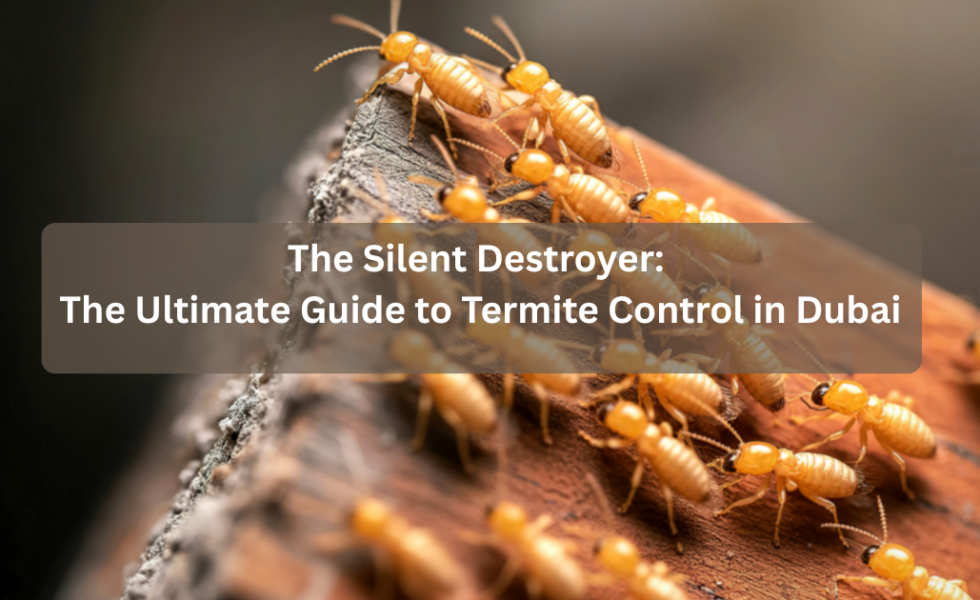
Owning a villa or property in Dubai is one of the most significant investments you can make. But beneath the landscaped gardens and desert sand lies a threat that costs UAE property owners millions of dirhams every year — termites. Known locally as white ants, these insects work silently and invisibly, consuming structural timber, insulation, and wooden finishes from the inside out before a single visible sign appears.
By the time most Dubai homeowners realise they have a termite problem, the damage is already extensive. This guide covers everything you need to know about termite control in Dubai — the warning signs to watch for, the treatment options available, and the most effective way to protect your property before and after construction.
Why Dubai Properties Are at High Risk From Termites
Two termite species are primarily responsible for property damage across Dubai and the wider UAE — Coptotermes gestroi and Microcerotermes diversus. Both are subterranean species, meaning they nest underground in the moist sand beneath your foundation and travel upward through mud tubes into the structure above.
Dubai’s warm soil temperatures, year-round construction activity, and irrigated garden landscaping create ideal conditions for termite colonies to establish and grow. A mature colony contains hundreds of thousands of individual insects and can consume up to one kilogram of wood per day. The structural and cosmetic damage this causes — to timber frames, door and window surrounds, parquet flooring, kitchen cabinets, and roof timbers — is costly and often irreversible without significant repair work.
5 Warning Signs of Termites in Your Dubai Villa
Because subterranean termites in the UAE spend most of their lives underground or hidden inside timber, infestations are frequently advanced by the time they are spotted. Know these five warning signs and act on them immediately.
Mud tubes on walls or foundations
Subterranean termites build pencil-width tubes of compacted soil and saliva to travel between the ground and the wood they are consuming. These tubes are most commonly found along exterior foundation walls, inside utility ducts, and in the corners of rooms at floor level. The presence of mud tubes confirms an active infestation.
Hollow-sounding wood
Tap firmly on wooden door frames, skirting boards, stair treads, and kitchen cabinet panels. Wood that sounds hollow or papery has been consumed from the inside by termites, leaving only a thin outer shell. This is one of the clearest indicators of an established internal infestation.
Discarded wings near windows and doors
Once a year, winged reproductive termites — known as swarmers — leave the colony to establish new nests. They shed their wings almost immediately after landing. Finding small, equal-sized wings collected near windowsills, door frames, or light fittings is a strong sign that a termite colony is active on or near your property.
Bubbling or peeling paint
As termites consume wood within walls, they introduce moisture into the structure. This moisture causes paint to bubble, blister, or peel in a pattern that closely resembles water damage. If paint deterioration appears without a visible water source, termite activity within the wall is a serious possibility.
Stiff or warped doors and windows
Moisture produced by termites feeding on timber frames causes the wood to swell and warp. If doors or windows that previously opened smoothly become stiff or difficult to close, particularly in areas with no recent rainfall or plumbing issues, have them inspected for termite damage.
Termite Treatment Options in Dubai
Professional termite control in Dubai requires selecting the right treatment method for the specific type of infestation, the property’s construction, and whether treatment is being carried out before or after the building is occupied.
Pre-construction anti-termite soil treatment
This is the most cost-effective form of termite control available and the first line of defence for any new build in Dubai. Before the foundation is laid, the surrounding and underlying soil is saturated with a chemical termiticide that creates a continuous barrier preventing subterranean termites from entering the structure. Dubai Municipality strongly recommends pre-construction termite treatment as standard practice for all new properties across the UAE.
Post-construction liquid termiticide treatment
For existing properties, a liquid termiticide barrier is applied to the soil around and beneath the building by drilling through flooring or external paving at regular intervals. The treatment creates the same chemical barrier as pre-construction treatment, blocking termite access points and killing any termites that contact the treated zone. This is one of the most widely used termite control methods in Dubai for occupied villas and apartments.
Termite baiting systems
Bait stations are installed at measured intervals around the property’s perimeter. Foraging termites discover the slow-acting bait, carry it back to the colony, and share it with other members — including the queen. The entire colony is eliminated over weeks to months. Baiting systems are low-toxicity, safe for households with children and pets, and provide ongoing monitoring capability after the initial infestation is resolved.
Fumigation
For severe or widespread drywood termite infestations — where termites are living within the wood structure itself rather than the soil — fumigation provides the most comprehensive treatment. The property is sealed and flooded with a penetrating gas that eliminates all termites, larvae, and eggs within 24 to 72 hours. Residents are required to vacate during treatment.
Wood treatment and surface application
As a supplementary measure, termiticide is applied directly to exposed timber, door frames, wooden furniture, and other wooden fixtures. This is typically used alongside soil treatment or baiting rather than as a standalone solution, particularly for protecting high-value wooden finishes and antique furniture.
The Cost of Delaying Termite Treatment
The financial case for early intervention is straightforward. A professional termite inspection in Dubai costs a fraction of what structural repair costs once termites have been active for a season or more. Parquet flooring replacement, structural timber reinforcement, cabinet replacement, and replastering of damaged walls are all common consequences of delayed treatment — each individually more expensive than a full professional termite treatment programme.
Book a Free Termite Inspection in Dubai
Alpha Arabian is a Dubai Municipality-approved pest control company with extensive experience in residential and commercial termite control across Dubai and the UAE. We offer free inspections, transparent treatment recommendations, and long-term warranties on our termite programmes.
Whether you need pre-construction soil treatment for a new build, post-construction liquid barrier treatment for an existing villa, or a baiting system installation for ongoing colony monitoring — our certified technicians will assess your property and recommend the right solution.
Call +971 4 227 3111, WhatsApp +971 588 219677, or visit alphaarabianuae.com/termite-control to book your inspection today.